
River Cruise Questions Answered: The Complete First-Timer's Guide for 2027–2028

By Danny Stahl, certified travel advisor and founder of Danny's Adventures. Former AmaWaterways River Cruise team member. Grew up on the Moselle River in Trier, Germany.
Last updated: November 2026 · Prices checked: November 2026
Welcome! I grew up in Trier, Germany, watching river ships glide past on the Moselle, and I later worked inside AmaWaterways. So when I help you plan a river cruise, I'm not just booking a stateroom. I want you to experience the real Europe: savoring regional cuisine and local wines, wandering cobblestone streets past Gothic cathedrals and Baroque palaces, standing where centuries of history happened, and sharing a glass on deck as castles drift by at sunset. Most of all, I want it to be the trip where you slow down and reconnect with the people you love.
I help travelers choose between AmaWaterways, Viking, Avalon, Uniworld, Scenic, Emerald, Tauck and Amadeus, and below are the questions my clients ask me most. I treat every client like family, so you'll get the same straight answers I'd give my own.
Quick answers to the most-asked river cruise questions
Question | Short answer |
How much does a river cruise cost? | Roughly $300–$600 per person per day on premium lines and $600–$1,000+ on luxury lines, before airfare. |
What's included? | Your cabin, all meals, most sightseeing and usually wine and beer with lunch and dinner. Luxury lines also include drinks all day, tips and transfers. |
Which river is best for a first cruise? | The Danube or the Rhine: easy logistics, famous cities and castles. |
When is the best time to go? | April–June and September–October for weather and value; late November–December for Christmas markets. |
Will I get seasick? | Very unlikely. Rivers are calm and you're never far from shore. |
Is there a dress code? | Casual by day, smart-casual at dinner. No tuxedos needed. |
Do I tip? | On some lines, tips are included. On others, plan roughly $15–$25 per person per day. |
What if the river is too high or too low? | Lines use ship swaps, motorcoaches or rerouted itineraries; cancellations are rare but possible. |
Can kids go? | It depends on the line. Viking is adults-only (18+), while AmaWaterways, Uniworld and Tauck run family departures. |
Should I book through a travel advisors Danny Stahl or Kevin Stahl? | Same price as booking direct, plus advice, advocacy and perks you won't get on your own. |
River cruise basics
What is a river cruise?
A river cruise is a small-ship voyage along a river, usually 7 to 15 nights, that stops in a different town or city almost every day. You unpack once, your floating hotel moves while you sleep or dine, and you step off right in the heart of town.
How is a river cruise different from an ocean cruise?
River ships carry roughly 130 to 200 guests, compared with thousands on many ocean ships. There are no casinos, big shows or sea days. Instead, the focus is on the destinations, with guided walking tours, regional food and wine, and docks in the center of town rather than a distant port.
Who goes on river cruises?
Most guests are 50 and older, curious about history and culture, and happy to trade nightlife for scenery and good conversation. Many are couples, but solos, friends and multigenerational families are increasingly common, especially on family departures.
Is a river cruise worth it?
For travelers who want to see several countries without packing and unpacking, yes. A week can include three or four countries, guided sightseeing in each and nearly all your meals, which makes it one of the easiest and best-value ways to see Europe.

Plan Your River Cruise With a Certified Multi-Line Advisor
I’m Danny Stahl, a certified advisor serving clients nationwide. Here in North Carolina, there’s no such thing as a stranger. Every client gets the same care I’d give my own family, from researching every promotion not available to the general public to finding you the exact itinerary and cruise line that fits you like a glove.
Ready to bring your travel plans to life? Let’s connect! You can book a complimentary 15-minute discovery call by clicking here, or simply email me with what you’d like me to research.
Email: danny.stahl@avoyanetwork.com
Phone: 919.914.9038
Before you book, see this month’s bonus promotions. I add my own exclusive Danny’s Adventures offers and stack them on top of other advisor-only promotions I research that aren’t available to the general public.
Moselle River Cruises: The Insider’s Guide From Someone Who Grew Up in Trier
Cost and what's included
How much does a European river cruise cost?
As a rough guide, premium lines run about $300–$600 per person per day and luxury lines about $600–$1,000 or more, before airfare. Season, cabin type and promotions swing the price a lot. A late-November Christmas markets sailing in a window cabin can cost half as much as a June balcony suite on the same ship.
What's included in a river cruise fare?
Every line includes your cabin, all meals and port charges on most itineraries. The big differences are drinks, tips, excursions and airport transfers:
Line | Tier | Drinks | Tips | Shore excursions | Airport transfers |
AmaWaterways | Luxury | Wine, beer, soft drinks with lunch and dinner | Not included | Several choices in most ports | With Ama air |
Avalon | Upper Premium | Wine, beer, soft drinks with lunch and dinner | Usually not included | Several choices in most ports | With Avalon air |
Viking | Upper Premium | Wine, beer, soft drinks with lunch and dinner | Not included | One included tour per port | With Viking air |
Emerald | Premium | Wine, beer, soft drinks with lunch and dinner | Included | Included in each port | Included |
Amadeus | Upper Premium | Wine, beer, soft drinks with lunch and dinner | Onboard tips included | Sold as optional packages | Varies |
Scenic | Luxury | All drinks, all day | Included | Several choices in each port | Included |
Uniworld | Luxury | All drinks, all day | Included | Several choices in each port | Included |
Tauck | Luxury | All drinks, including premium spirits | Included | All excursions included | Included |
Inclusions change with promotions and by market. I confirm the details for your exact sailing.

Which river cruise line is the most all-inclusive?
Tauck, Scenic and Uniworld include the most: drinks all day, gratuities, excursions and transfers. Tauck stands out because every excursion is included, and Tauck and Scenic both cover gratuities, drinks and port charges.
What costs extra on a river cruise?
Usually airfare, travel protection, tips on lines that don't include them, drinks outside mealtimes on premium lines, optional excursions, spa treatments and laundry.
Which river, and when to go
Which European river is best for a river cruise?
River | Route highlights | Best for |
Danube | Passau, Melk, Vienna, Bratislava, Budapest | First-timers who love grand capitals and the Wachau Valley wine country |
Rhine | Amsterdam to Basel, the castle-lined Rhine Gorge, Cologne, Strasbourg | Castles, vineyards and the most "storybook" scenery |
Moselle | Trier, Bernkastel-Kues, Cochem, often paired with the Rhine | Wine lovers and slower, village-to-village days (my home river) |
Seine | Paris, Giverny, Rouen, Normandy beaches | History lovers and veterans visiting the D-Day sites |
Rhône & Saône | Lyon, Avignon, Arles, Burgundy | Food lovers and Provence fans |
Douro | Porto and the terraced port-wine vineyards of northern Portugal | Wine lovers and repeat river cruisers |
Main & Dutch/Belgian waterways | Bavarian towns, tulip fields, Amsterdam, Bruges | Spring tulip season and Christmas markets |
Rhine or Danube for a first river cruise?
Both are excellent. Choose the Danube for imperial capitals like Vienna and Budapest. Choose the Rhine for castles, vineyards and charming German towns. My detailed Rhine vs. Danube guide breaks down the differences. You choose these two rivers as you sail through four or five countries in one sailing.
What is the best time of year for a river cruise?
Months | What to expect |
March–April | Tulip season in Holland and Belgium; cooler days, lower fares |
May–June | Blooming countryside, long days, popular and pricier |
July–August | Warmest weather and the biggest crowds; late summer can bring low water |
September–October | Grape harvest, golden vineyards, pleasant temperatures |
Late November–December | Christmas markets, festive decorations, cold but magical |
How long should my first river cruise be?
Seven nights is the classic first cruise. Ten to 15 nights lets you combine rivers, such as the Rhine, Main and Danube from Amsterdam to Budapest. Add two or three hotel nights before or after to enjoy your embarkation city.
Ships and cabins
How big are river cruise ships?
Most European river ships are long and narrow so they fit through locks and under low bridges, and they typically carry about 130 to 200 guests. That small size is what lets them dock right in town.
Which cabin should I book on a river cruise?
Cabin type | What it is | Good for |
Window cabin (lowest deck) | A fixed window near the waterline that lets in light but doesn't open | Travelers who spend most of the day ashore and want the best price |
French balcony | A floor-to-ceiling sliding door with a railing, but no space to step out | The best value for fresh air and views |
Full balcony | A small outdoor balcony with seating | Travelers who love scenic sailing, like the Rhine Gorge or Wachau Valley |
Twin balcony (AmaWaterways) | A French balcony and a full outdoor balcony in the same cabin | The best of both, a signature AmaWaterways design |
Suite | Larger cabin, often with a living area and extra perks | Special occasions and longer cruises |
Is a balcony worth it on a river cruise?
It depends on the route. On scenic stretches like the Rhine Gorge, Wachau Valley and Douro, a balcony is a joy. On city-heavy itineraries you're ashore most of the day, so a French balcony often gives you 90% of the experience for less.
Which deck is best?
The lowest deck is the quietest and least expensive, but its windows sit near the waterline. Middle and upper decks have better views. Cabins near the engine or the stern can be noisier, so ask before you book. This is an area where my years inside AmaWaterways really help my clients.
Life onboard
What is a typical day on a river cruise?
Breakfast onboard, a guided morning walking tour, lunch back on the ship or on your own in town, a free afternoon or optional excursion, then a sail-away with drinks on the sun deck, a multi-course dinner and perhaps a local musician in the lounge. Some days you sail during the day and enjoy the scenery from the deck.
What should I wear on a river cruise?
Comfortable, casual clothes by day and smart-casual at dinner. There are no formal nights; a nice shirt or blouse works even for the captain's dinner. Most importantly, bring good walking shoes for cobblestones.
Will I get seasick on a river cruise?
It's very unlikely. Rivers are calm, the ships are low and stable, and you're never far from land.
Is the food good on a river cruise?
Yes, and it's one of the highlights. Menus feature regional dishes and local wines from the countries you're sailing through, and several lines offer specialty dining or chef's table experiences.
Is there Wi-Fi on a river cruise?
Most ships include free Wi-Fi, but it can be slow or patchy in remote stretches and locks. Plan on light email and messaging, not streaming.
How much should I tip on a river cruise?
If tips aren't included in your fare, plan on roughly $15–$25 per person per day for the crew and Cruise Director, plus a few euros for local guides. Lines like Tauck, Scenic, Uniworld and Emerald include gratuities.
What is "rafting" on a river cruise?
In busy ports, ships sometimes dock side by side and you walk through another ship's lobby to reach shore. It's normal and safe, but it can block the view from your cabin for a few hours. It's one of the small things nobody mentions until you're there.

Excursions and active options
Are shore excursions included on river cruises?
On most lines, yes. Viking includes one guided tour in each port, AmaWaterways, Avalon, Scenic and Uniworld offer several choices in most ports, Emerald includes an excursion in each port, and Tauck includes every excursion. Amadeus sells its excursions as optional packages. Tours are small groups with a local guide and a wireless headset so you can hear clearly.
Can I explore on my own?
Absolutely. Because ships dock in the center of town, it's easy to skip a tour and wander, find a café or visit a museum on your own. Your Cruise Director will give you a map and "all aboard" time.
Are there active river cruises?
Yes, and they're growing fast. AmaWaterways carries bikes onboard and offers guided bike rides and hikes in many ports. Amadeus also has bikes onboard, and most lines offer at least some "active" tour choices for travelers who like to move.
What is the Backroads and AmaWaterways partnership?
Backroads, the active travel company, and AmaWaterways have a special partnership. When Backroads incorporates river cruising into its adventures, such as its Danube River Cruise Bike Tour from Prague to Budapest, it sails on AmaWaterways ships, and guests ride or walk ashore each day with Backroads leaders. I used to work for AmaWaterways and have special relationships with executives at both companies, so these are adventures I know inside and out.
Do river cruises offer pre- and post-cruise extensions?
Most lines offer two- or three-night hotel packages in cities like Prague, Paris, Amsterdam or Budapest. They're a great way to recover from jet lag before boarding.

Water levels and what can go wrong
What happens if river levels are too low or too high?
If a stretch of river becomes too shallow for ships, or too high to pass under bridges, the cruise line adjusts. The most common fixes are:
Ship swap: you sail on your ship to the problem stretch, then switch to an identical sister ship on the other side. Most lines handle this smoothly.
Motorcoach transfer: you travel by coach around the impassable section, and sometimes stay docked or in a hotel for a night.
Rerouted itinerary: the ship skips or swaps a port.
Cancellation: rare, and usually comes with a refund or future cruise credit.
Was 2026 a bad year for low water?
Yes. A historic drought in summer 2026 pushed the Rhine and Danube to very low levels. Multiple lines used ship swaps and coach transfers, some departures were canceled, and one Viking ship ran aground. Rain in late summer helped, but the season was a reminder that late summer carries the most low-water risk.
Which rivers are most affected?
The Rhine and Danube see the most low-water disruption in dry summers, and the stretch between Cologne and Vienna is also most prone to high water after heavy rain or snowmelt. The Moselle has low bridges, so high water can stop ships there quickly. The Elbe is known for chronically low water.
How can I protect myself?
Choose your season wisely. Spring and fall are generally safer bets than late summer.
Choose a line with a strong track record. Lines with large fleets on the same river can swap ships more easily.
Buy the right travel protection. Many policies don't pay if the cruise line provides an alternative, like a coach or ship swap, so read the fine print. I help my clients pick coverage that fits.
Book with an advisor. When plans change, you have someone in your corner who can talk directly with the cruise line.
Are river cruises still a good idea after the 2026 drought?
Yes. Even in 2026, many sailings ran as planned or with only minor changes, and lines have become very good at keeping guests moving. The industry still plans to add 21 new river ships in 2027.
Who river cruising is right for
Are river cruises good for seniors?
Yes, they're one of the most popular ways for travelers 55 and older to see Europe: you unpack once, meals are handled and the pace is relaxed. I began my career as a Travel and Activities Director for 55+ communities, so I know what matters: walking levels, elevators and help with luggage.
Are river cruises good for travelers with limited mobility?
They can be, with the right planning. Many tours involve cobblestones and hills, not every ship has an elevator to every deck, and gangways can be steep when water levels change. Most lines offer "gentle walker" groups. Tell me your needs and I'll match you to the ships and itineraries that work, just as carefully as I would for my own parents.
Can solo travelers go on a river cruise?
Yes. Some ships have dedicated solo cabins, and lines periodically reduce or waive single supplements. River ships are small and social, so it's easy to make friends at dinner.
Can kids go on a river cruise?
It depends on the line:
Line | Minimum age / family options |
Viking | Adults only, 18+ |
AmaWaterways | 4 years; family sailings with Adventures by Disney |
Uniworld | 4 years; family departures |
Tauck | 3 years on Tauck Bridges family cruises |
Avalon | 8 years |
Scenic and Emerald | 12 years |
Age rules can change; I confirm them for your sailing.
Are river cruises good for veterans and military families?
Very. A Seine cruise with a visit to the Normandy D-Day beaches is one of the most moving trips I book. As an Air Force veteran, I offer active duty, retired and veteran travelers a complimentary onboard credit on any line I book, plus access to military rates where available.
Booking your river cruise
How far in advance should I book a river cruise?
For 2027 and 2028, book 9 to 15 months ahead for the best choice, and earlier still for balcony cabins, suites, Christmas markets sailings and peak spring and fall dates. River ships are small, so the best cabins go first.
When are the best river cruise deals?
The early-year booking season, roughly January through March, often brings the strongest promotions, such as reduced fares, free airfare offers or added perks. Shoulder-season dates in March, early April, late October and November are also good value.
How do deposits and final payments work?
You typically pay a deposit to hold your cabin, with the balance due about 90 to 120 days before departure, depending on the line. Tauck, for example, requires final payment 120 days before its cruises.
Do I need a passport for a European river cruise?
Yes. Cruise lines typically ask that your passport be valid for at least six months after your return date.
Should I book a river cruise directly or through Danny's Adventures?
The price is the same either way. Booking through Danny's Adventures adds honest cross-line comparisons, help with flights and hotels, advocacy if plans change and often extra perks you won't get booking direct.
Why plan your river cruise with Danny's Adventures
I care about getting your trip exactly right, because a river cruise often marks a milestone: an anniversary, a retirement, a first trip to the old country. These memories last a lifetime, and I want yours to be everything you imagined.
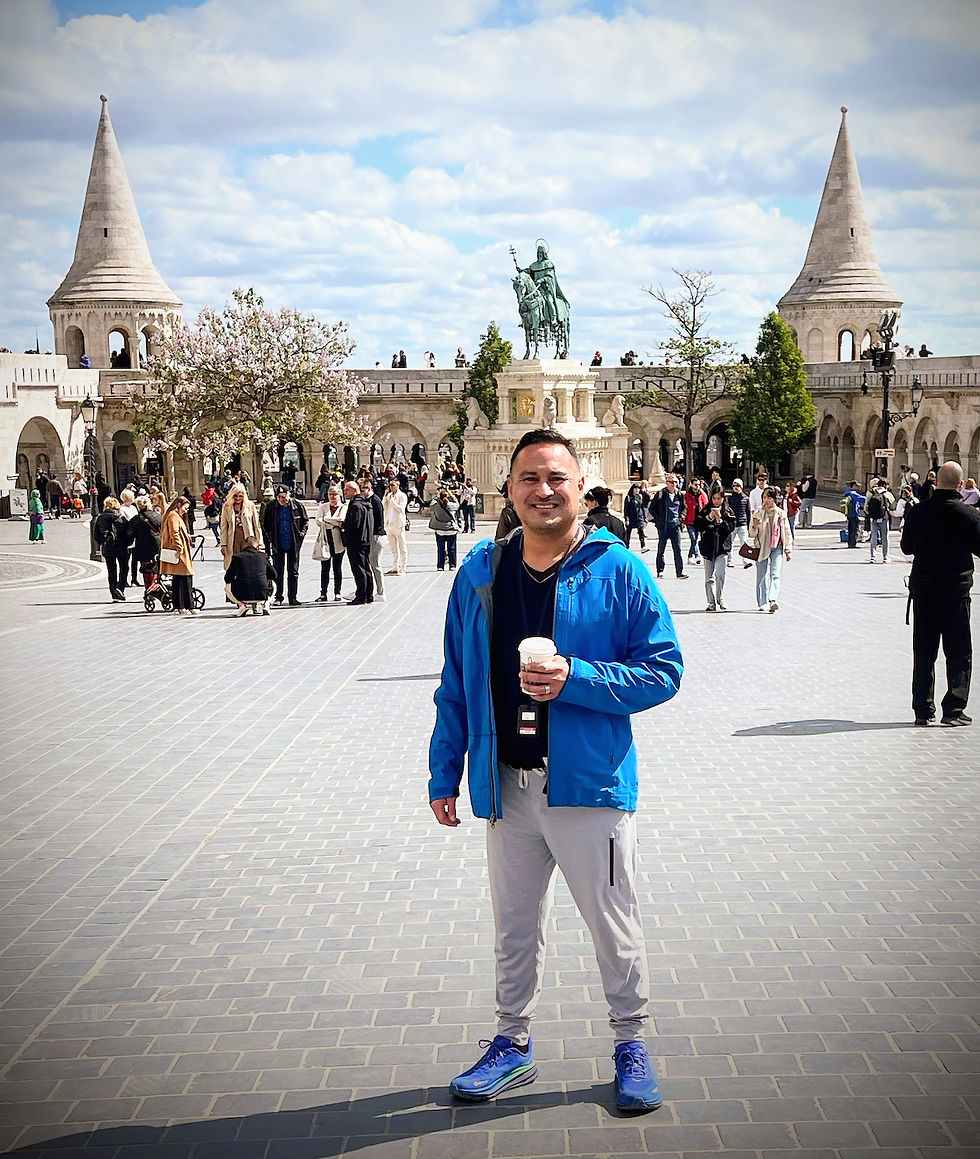
Ready to plan your river cruise?
The best cabins on 2027 and 2028 sailings go first, especially balconies, suites and spring and fall dates. When you book with me, you get:
Honest, cross-line advice across AmaWaterways, Viking, Avalon, Uniworld, Scenic, Emerald, Tauck and Amadeus
Insider expertise: I have special relationships with the decision makers at each cruise line
One point of contact from your first question to your flight home, including help if water levels or plans change, no call centers.
European roots: I grew up on the Moselle in Trier, so I know these rivers firsthand
Ready to bring your travel plans to life? Let’s connect! You can book a complimentary 15-minute discovery call by clicking here, or simply email me with what you’d like me to research.
My favorite restaurants on the Danube
1. Historische Wurstkuchl, Regensburg
Historische Wurstkuchl is a tiny sausage kitchen beside Regensburg's 12th-century Stone Bridge, and it has served hungry travelers for more than 500 years. It may be the oldest continuously open public restaurant in the world. Order a plate of small charcoal-grilled sausages with sauerkraut and the house sweet mustard, and eat on the terrace by the river.
What to order: six or eight sausages with sauerkraut and mustard, and a local beer
Good to know: no reservations; it's quick, casual and fun, and easy to reach from the river
DANNY'S NOTE: The views were amazing, and the large sausages were complemented by exceptional sauerkraut that was cold and crunchy, not hot. The location at the Stone Bridge is ideally situated, and we were able to enjoy the sunshine.
2. Loibnerhof, Dürnstein (Wachau Valley)
Loibnerhof is a 400-year-old inn just east of Dürnstein, run by the Knoll family, one of the Wachau's best-known wine families. On a nice day, tables are set out in the apple orchard. It's the perfect wine-country lunch between Melk and Krems.
What to order: a schnitzel or seasonal Austrian dish, Knoll Grüner Veltliner or Riesling, and apricot dumplings when they're in season
Good to know: book ahead; it's about 1.5 km from Dürnstein, so plan a short walk or taxi
DANNY'S NOTE: A truly memorable meal. The trout fillet was out of this world, and the venison stew was perfectly prepared.
3. Figlmüller, Vienna
Figlmüller has been Vienna's "home of the schnitzel" since 1905, in a tiny tavern on Wollzeile near St. Stephen's Cathedral. Its pork schnitzel is about 12 inches across and hangs over the plate. There's a second, roomier location around the corner on Bäckerstraße.
What to order: the Figlmüller schnitzel with potato salad, and a glass of their own Viennese wine
Good to know: reserve ahead; one schnitzel is easily enough for two light eaters
DANNY'S NOTE: You have to order the potato-field salad with pumpkin seed oil!
4. Café Sacher, Vienna
Café Sacher is the home of the Original Sacher-Torte, the chocolate and apricot cake first created in 1832. The red-velvet café sits right behind the Vienna State Opera, so it's an easy stop on a city tour.
What to order: a slice of Original Sacher-Torte with whipped cream and a Wiener Melange (Vienna's version of a cappuccino)
Good to know: book a table online, or expect a line in peak season
DANNY'S NOTE: The Sacher-Torte was so delicious I shipped three whole cakes back home to friends and one for myself :-)

5. Café Gerbeaud, Budapest
Café Gerbeaud has been one of Europe's grand coffeehouses since 1858, with crystal chandeliers and marble tables on Vörösmarty Square. In late November and December, the square becomes Budapest's main Christmas market, right outside the door.
What to order: a Gerbeaud slice (walnut, apricot and dark chocolate) and a coffee
Good to know: no reservations; go before 11 a.m. to beat the tour groups
DANNY'S NOTE: You will love the traditional Hungarian pastries, especially the Gerbeaud slice and the Sissi dessert make with vanilla sponge cake, white chocolate mousse, wild berry-violet cream, and violet jelly!
My favorite restaurants on the Rhine
1. Früh am Dom, Cologne
Früh am Dom has poured Kölsch beside Cologne Cathedral since 1904. It's the second-largest traditional brewhouse in Germany after Munich's Hofbräuhaus, with a maze of wood-paneled rooms. Waiters called Köbes keep bringing small glasses of Kölsch until you set your coaster on top.
What to order: Kölsch, Himmel un Ääd (black pudding with mashed potatoes and apples) or a pork knuckle
Good to know: big and busy, so it's easy to get a table with a group
DANNY'S NOTE: Located just a few steps from the cathedral, I enjoyed the two typical dishes of the city: the sausage and the pork knuckle, served with with a hot German-style mustard.
2. Breuer's Rüdesheimer Schloss, Rüdesheim
Breuer's Rüdesheimer Schloss sits between the lively Drosselgasse and the quiet Steingasse. The Breuer family has run this wine tavern since 1952 and makes its own Riesling and Pinot Noir. Many evenings, a live band gets the whole room singing.
What to order: a regional dish with a glass of the family's Riesling, then a Rüdesheimer Kaffee (coffee with Asbach brandy, flamed at the table and topped with cream)
Good to know: a calmer, higher-quality choice than many spots on the busy Drosselgasse
DANNY'S NOTE: This is the place for exceptional Rieslings both red and white as well as other local wines.
3. Maison Kammerzell, Strasbourg
Maison Kammerzell is the ornate half-timbered house facing Strasbourg Cathedral, built in 1427 and one of the most photographed buildings in Alsace. Inside, painted rooms and leaded windows make lunch feel like a step back in time.
What to order: choucroute (Alsatian sauerkraut with sausages and pork), or the house fish choucroute, with a glass of Alsace Riesling
Good to know: reserve ahead, especially during the Christmas markets
DANNY'S NOTE: The Risotto is also very delicious here.
4. La Maison des Têtes, Colmar
La Maison des Têtes is a 1609 Colmar landmark named for the 106 carved faces on its façade. Its Brasserie Historique serves classic Alsatian dishes in the courtyard and paneled dining room; the same house also has a Michelin-starred restaurant, Girardin. Colmar is a popular excursion when Rhine ships dock in Breisach.
What to order: baeckeoffe (a slow-baked meat and potato casserole) or choucroute, with an Alsace Pinot Gris
Good to know: book the brasserie for lunch; check days, as it closes some days of the week
DANNY'S NOTE: 5-star service and everything is exceptional! You'll want every single dessert on the menu!
5. Zum Roten Ochsen, Heidelberg (day trip)
Zum Roten Ochsen has been Heidelberg's most famous student tavern since 1703, run by the Spengel family for six generations. Old student photos cover the walls, names are carved into the tables, and Mark Twain and Bismarck are among past guests. Heidelberg sits on the Neckar, so it's a day trip on Rhine sailings that stop near Mannheim or Speyer.
What to order: hearty German classics and a local beer or Baden wine
Good to know: hours are limited, especially at lunch in winter, so check before you go
DANNY'S NOTE: This is a drive from the Rhine, so you will have to take one of the exclusive excursions to Heidelberg. But this place is worth it!
7 tips for eating ashore
Check the "all aboard" time first. Plan lunch around it, not the other way around. If the ship sails at 1 p.m., a quick sausage beats a two-hour lunch.
Reserve the famous spots. Figlmüller, Café Sacher, Maison Kammerzell and Loibnerhof fill up, especially in summer and during the Christmas markets.
Ask your Cruise Director. They know which places are open that day and how far they are from the dock.
Carry some cash. Small taverns and market stalls don't always take cards, and euros won't work in Budapest (Hungary uses the forint).
Tip the European way. Round up or add about 5–10% for good service, and tell the server the total as you pay rather than leaving cash on the table.
Don't skip the ship's regional dinners. Most lines serve local dishes and wines as you sail, so you can save your ashore meals for the true icons.
Go early or late. Lunch crowds peak around 12:30. Arriving at 11:30 or after 2 p.m. usually means no wait.
Proudly serving travelers in Raleigh, Durham, Chapel Hill, Charlotte, Northern Virginia, Maryland, Washington, D.C., San Antonio, Houston and nationwide.
Danny's Adventures is an independent travel agency affiliated with Avoya Travel. We are not owned by or employed by any cruise line. All brand names are trademarks of their respective owners, and inclusions, policies and prices are subject to change.
Testimonials
“Danny’s expertise shone through, from planning to seamless execution. Our seven-day AmaWaterways Douro cruise from Porto was a wonderful week of villages, vineyards, olive and almond groves, and stunning views from our stateroom.”
— Oscar R., Houston, TX - AmaDouro - Enticing Douro
“Danny is like a best friend who makes sure you get exactly what you want. He explains whether the pre- and post-cruise land extensions are worth it, and if you’d like, he’ll guide you through every excursion choice.”
—Reva N., Burlington, VT - Viking Kara - Rhine River
Frequently asked questions
1. What is a river cruise?A river cruise is a small-ship voyage along a river, usually 7 to 15 nights, that stops in a different town or city almost every day. You unpack once, your floating hotel moves while you sleep or dine, and you step off right in the heart of town.
2. How much does a European river cruise cost?As a rough guide, premium lines run about $300–$600 per person per day and luxury lines about $600–$1,000 or more, before airfare. Season, cabin type and promotions swing the price a lot.
3. Which river cruise line is the most all-inclusive?Tauck, Scenic and Uniworld include the most: drinks all day, gratuities, excursions and transfers. Tauck stands out because every excursion is included, and Tauck and Scenic both cover gratuities, drinks and port charges.
4. Rhine or Danube for a first river cruise?Both are excellent. Choose the Danube for imperial capitals like Vienna and Budapest. Choose the Rhine for castles, vineyards and charming German towns.
5. Is a balcony worth it on a river cruise?It depends on the route. On scenic stretches like the Rhine Gorge, Wachau Valley and Douro, a balcony is a joy. On city-heavy itineraries you’re ashore most of the day, so a French balcony often gives you 90% of the experience for less.
6. Will I get seasick on a river cruise?It’s very unlikely. Rivers are calm, the ships are low and stable, and you’re never far from land.
7. How much should I tip on a river cruise?If tips aren’t included in your fare, plan on roughly $15–$25 per person per day for the crew and Cruise Director, plus a few euros for local guides. Lines like Tauck, Scenic, Uniworld and Emerald include gratuities.
8. What happens if river levels are too low or too high?If a stretch of river becomes too shallow for ships, or too high to pass under bridges, the cruise line adjusts. The most common fixes are a ship swap, a motorcoach transfer around the impassable section, a rerouted itinerary or, rarely, a cancellation with a refund or future cruise credit.
9. Can kids go on a river cruise?It depends on the line. Viking is adults-only (18+). AmaWaterways and Uniworld accept children from age 4 and run family departures, Tauck accepts children from age 3 on Tauck Bridges family cruises, Avalon’s minimum is 8, and Scenic and Emerald require age 12.
10. What is the Backroads and AmaWaterways partnership?Backroads and AmaWaterways have a special partnership. When Backroads incorporates river cruising into its adventures, such as its Danube River Cruise Bike Tour from Prague to Budapest, it sails on AmaWaterways ships, and guests ride or walk ashore each day with Backroads leaders.
11. How far in advance should I book a river cruise?For 2027 and 2028, book 9 to 15 months ahead for the best choice, and earlier still for balcony cabins, suites, Christmas markets sailings and peak spring and fall dates.


Comments